Perfect Understanding of the Critical Path (CPM): Identifying the Core Cause of Delays
What is the Critical Path?
One of the most frequently appearing academic terms in project management is the Critical Path (CPM). This term originated from the Critical Path Method (CPM) developed in the 1950s by DuPont in the US to shorten chemical plant maintenance schedules.
Simply defined, the critical path is the 'path of tasks with the longest duration' leading from the start of a project to its end. Tasks on this path have absolutely no slack (or float) time, so if even a single day is delayed, it yields the critical result of delaying the final deadline of the entire project.
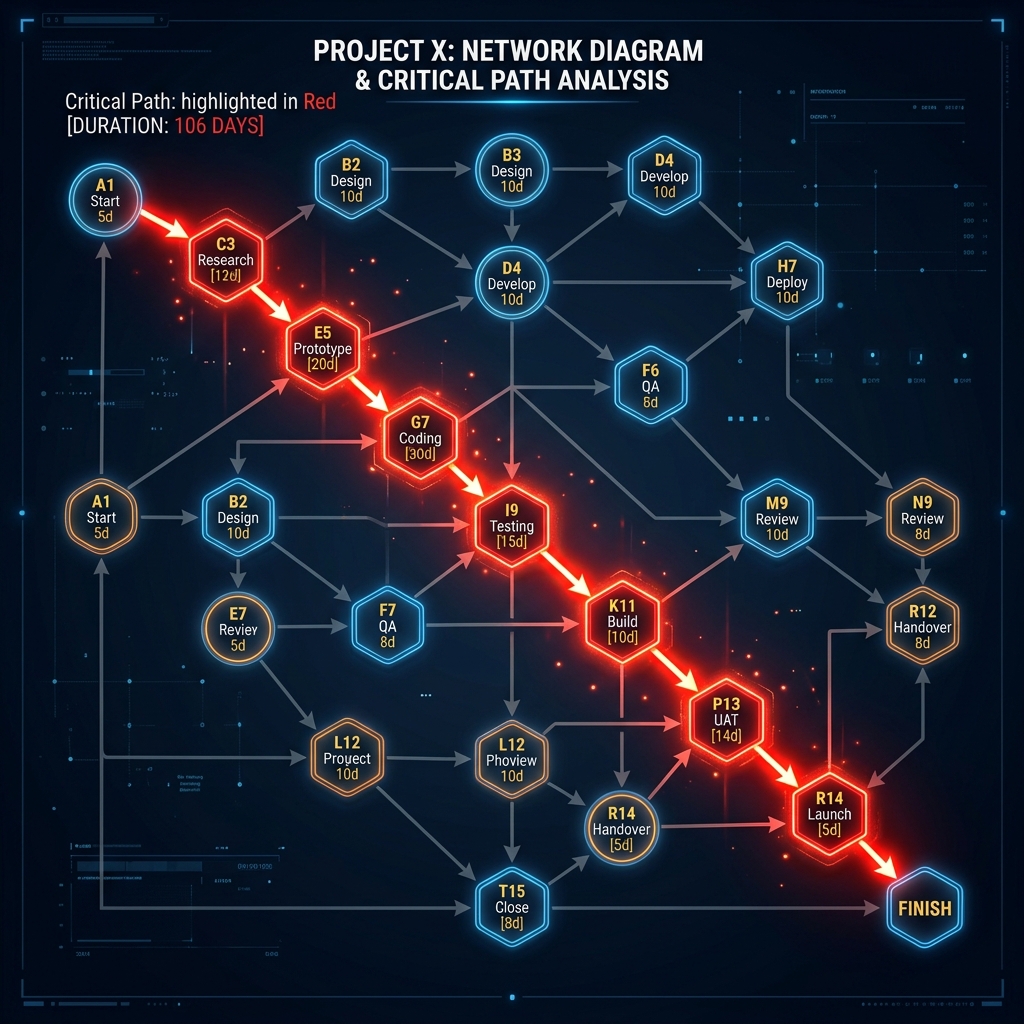
[Figure 3] Critical Path Network of a project highlighted in red
Understanding Float (Slack) Time
To understand the critical path, you must first know the concept of Float (Slack). Float is the "maximum allowed delay time for a specific task without affecting the deadline of the entire project."
| Category | Float Time | Management Priority |
|---|---|---|
| Tasks on Critical Path | 0 days (No Slack) | Top Priority Monitoring (Fatal if delayed) |
| Non-Critical Path Tasks | 1+ days (Has Slack) | Relatively flexible (Target for resource shifting) |
Practical Application of CPM
The reason PMs must analyze and find the critical path in real work is clear. Resources (time, budget, manpower) are always limited, so you cannot monitor all tasks with equal weight. Therefore, you must use CPM to select and focus.
1. Resource Leveling
Suppose a 'Core Backend Dev' task on the critical path is on the verge of being delayed due to a lack of personnel. The PM can make a decision to withdraw personnel from 'Sub-page Design' (which is not on the critical path and has a 5-day 'slack') and prioritize supporting the core development.
2. Schedule Compression Techniques (Crashing & Fast Tracking)
When a project deadline is suddenly moved up by a week, reducing the schedule of just any task is meaningless. Only by reducing the duration of tasks on the critical path will the overall deadline be brought forward. Injecting overtime pay or outsourcing costs to reduce physical time is called Crashing, and forcefully running sequential tasks simultaneously is called Fast Tracking.
Finding the Critical Path in a Gantt Chart
In the past, people found the critical path by manually drawing nodes and arrows and performing mathematical Forward Pass and Backward Pass calculations. However, in modern systems like Rudia Online Gantt, if you simply connect dependencies (predecessor/successor arrows) between tasks, the invisible internal system algorithm automatically searches for the longest path. Intuitively track the core tasks that become bottlenecks in a complex intertwined timeline!